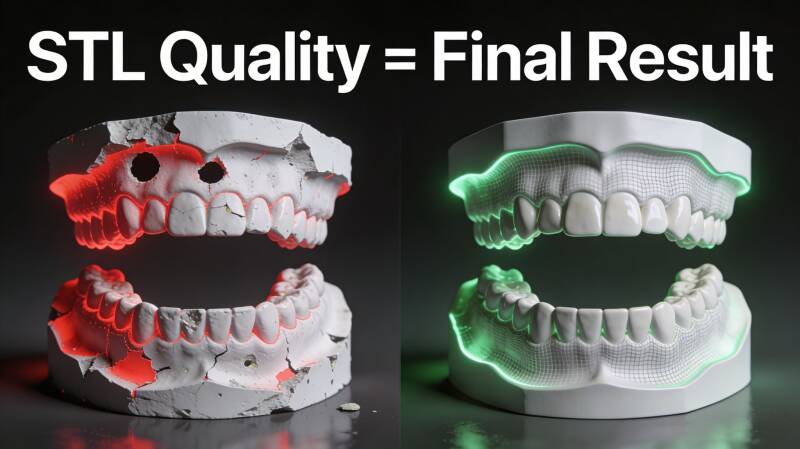
One of the biggest misconceptions in digital dentistry is this:
“The lab can fix it later.”
Here’s the truth: bad scans don’t just make work harder — they can ruin the entire case before it even reaches the lab.
Let’s break it down:
1️⃣ Missing margins or holes in the scan
No matter how skilled your designer or how advanced your CAD/CAM software is, a missing margin or hole is a gap that can’t be invented. This leads to restorations that don’t fit properly, more adjustments, and frustrated patients.
2️⃣ Unclear or inconsistent prep lines
A clear prep line is the blueprint for any restoration. When it’s ambiguous, your designer is forced to guess. And guesswork in dentistry is never ideal — it’s costly, time-consuming, and often leads to remakes.
3️⃣ Inaccurate occlusion data
Even a tiny error in bite registration or occlusal contact can turn a seemingly perfect crown into a functional nightmare. The patient experiences discomfort, adjustments are needed, and confidence in the treatment drops.
4️⃣ Incomplete arch or bite scans
When the lab doesn’t have full arch or occlusion data, it’s like trying to build a house without a blueprint. Functional and aesthetic outcomes suffer — restorations might look fine but fail clinically.
💡 The reality is simple but critical:
Your STL scan isn’t just a file you send to the lab. It’s the foundation of the entire treatment. A great scan ensures your design is accurate, your restorations fit perfectly, and your patients leave happy.
✅ High-quality scans + clear instructions + proper communication = predictable, beautiful results every time.
Remember: the difference between a restoration that’s “okay” and one that’s exceptional isn’t just talent or technology — it’s process, attention to detail, and collaboration.
🌐 www.dmdentaldesign.com