Implant Bar Design — Precision Bars for Overdentures and Full Arch
- Delivery time
- 1 – 2 days
- Revisions
- Included until approved
- Software
- exocad
- Delivers
- STL file
Our implant bar design service covers overdentures, hybrid prostheses and full-arch restorations, built around your chosen attachment system and library.
The priority on every bar is a passive fit and enough material where the load actually is, without making the prosthesis bulky.
What we focus on in every implant bars case
Passive fit. Cylinder alignment checked against the scan bodies.
Screw access. Channels angled away from the visible surfaces.
Hygiene. Cleanable undersides with a controlled tissue gap.
Material volume. Cross-sections sized for the span and load.
Our step-by-step process
- 1
Submit your scanned case files and instructions.
- 2
We produce the digital design and send it for review.
- 3
After approval we deliver the final files.
- 4
You receive the stl file — ready for production.
How implant bar design works
An implant bar has to distribute load across several implants that are rarely parallel. Design begins from scan bodies or a verified scan of the multi-unit abutments, so the interface geometry comes from the manufacturer's library rather than from an approximation of the scan surface — that is what makes a passive fit achievable.
The bar is then shaped around the prosthesis it carries: cross-section sized for the span and the cantilever, attachment positions chosen for retention that the patient can actually handle, and enough clearance underneath for hygiene access. Where the overdenture is milled onto the bar, primary and secondary parts are designed together.
Output is prepared for milling in titanium or cobalt-chrome, with the screw channels angulated for access.
Three dimensions decide whether the bar survives in function: the cantilever length, which we keep proportional to the anterior-posterior spread of the implants rather than extending it to fill the arch; the cross-section, sized for the span and for the metal you mill; and the vertical prosthetic space, measured before design so that the bar, the attachment, the denture base and the teeth all fit within it.
Hygiene is designed in, not added later. The undersurface is kept convex and polished with real clearance to the ridge, so a brush or interdental aid can pass underneath — bars far more often cause trouble through tissue inflammation than through fracture. Attachment positions follow the same logic: placed on a single insertion path the patient can manage, and serviceable so clips or inserts can be replaced without remaking the denture.
For long-span full-arch cases, scan error accumulates across the arch. Where the case warrants it we ask for a verification jig or photogrammetry record before designing, because confirming implant positions costs far less than remaking a milled titanium bar.
Cases we design most often
- Dolder, Hader and round bars for overdentures
- Milled bars with locator or attachment housings
- Screw-retained full-arch frameworks on multi-unit abutments
- Hybrid bars supporting an acrylic or composite superstructure
- Primary and secondary milled bar overdentures designed as one case
- Bars over angulated or non-parallel implants with corrected screw access
What we need to start
- Scan with scan bodies in place, plus the implant system and platform
- Antagonist scan and the planned tooth setup or existing denture scan
- Preferred attachment system and material
- Vertical space available, or the existing denture scan we can measure it from
- Output: milling-ready STL, screw channels angulated, plus design screenshots for approval
Real case
An implant bar case, step by step
How a full-arch implant bar is designed from the tooth setup to the final milling file.
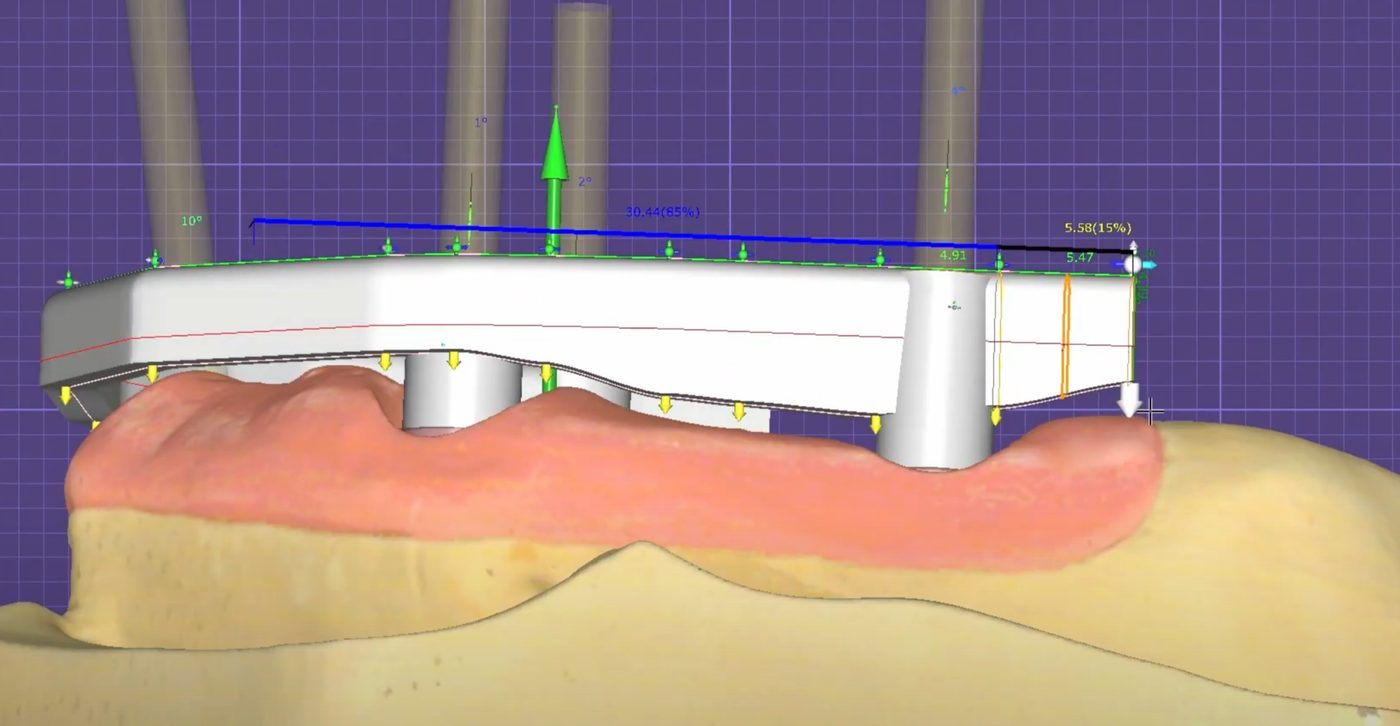
1. Bar inside the tooth setup
The bar is designed inside the planned teeth, so there is enough room for the denture or veneering material on top.
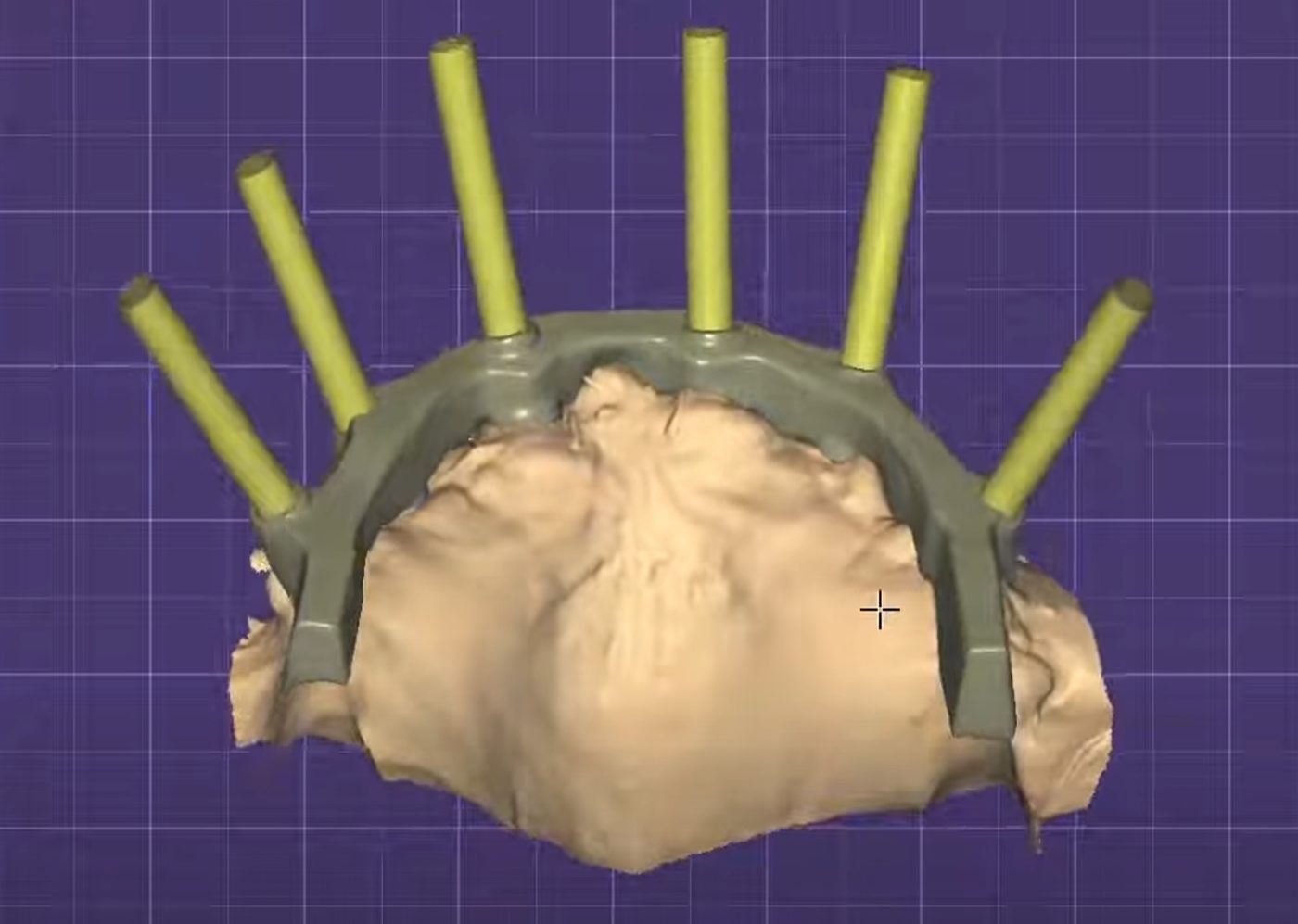
2. Screw channels on each implant
Screw channels follow the implant axes, so every screw can be reached and the bar seats without tension.
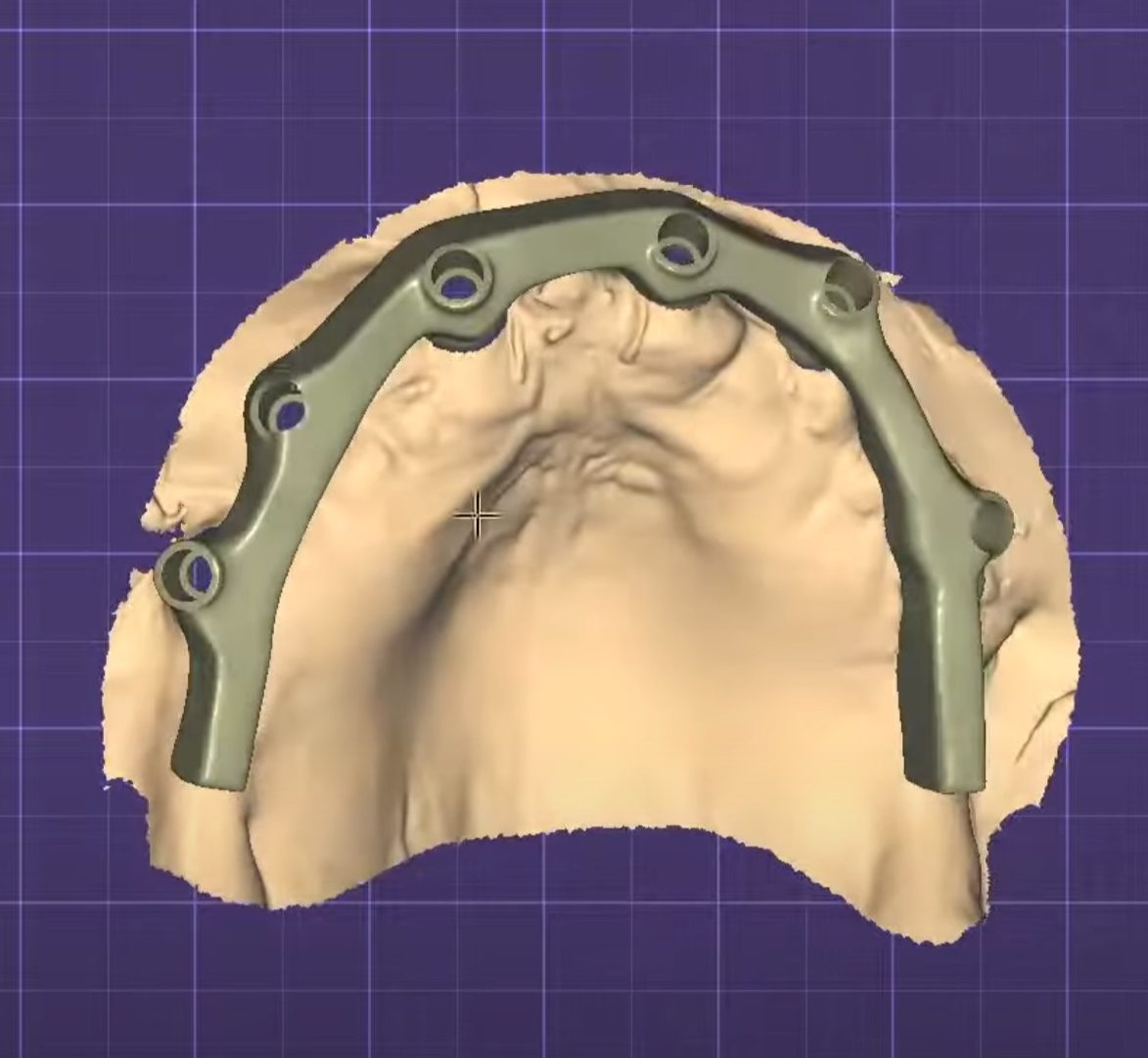
3. Fit on the model
The bar is checked on the scanned model for tissue clearance and space for cleaning underneath.
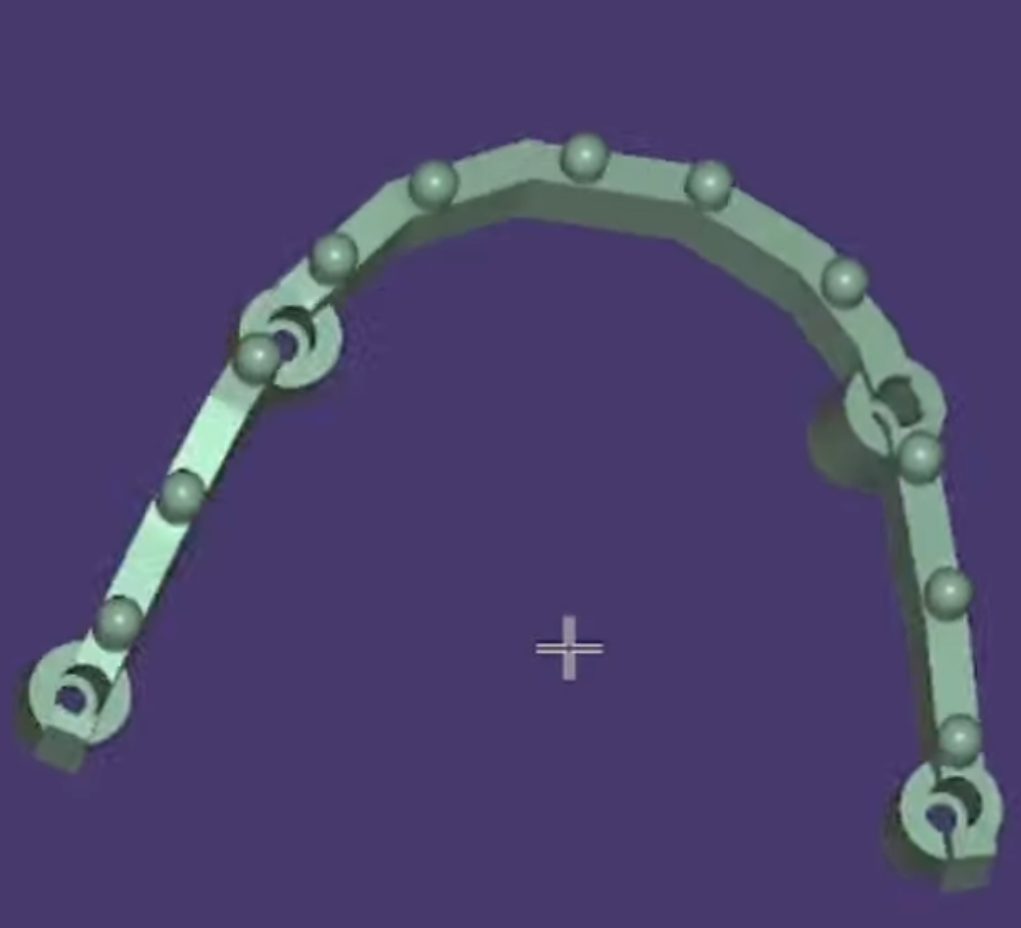
4. Final bar ready for milling
Cross-section and connections are checked for strength, then the file is exported for milling.
Implant Bars design — frequently asked questions
- Which bar types do you design?
- Screw-retained bars, milled bars and overdenture bars on multi-unit or implant level, with the attachments you specify.
- How is passive fit handled?
- The bar is built on scan-body positions with controlled tolerances and screw-channel angulation checked before delivery.
- How long does implant bar design take?
- Routine cases are designed overnight. Complex or large cases can take longer, and we tell you the expected time when we confirm the case.
- How many revisions are included?
- Revisions are included until you approve the design. Additional redesigns caused by new clinical instructions may be quoted separately.
- Which software do you use, and what do I receive?
- We design in exocad and deliver the stl file, ready to send straight to your mill or printer.
Real cases from our desk
Implant Bars design cases
A selection of implant bars cases we designed for dental labs and clinics. Tap any image to see it full size.
Other design services
Fast, precise and customized results
Email us your case and scans and get a design quote. First case? We'll confirm turnaround before we start.
Prefer email? Send your files directly to info@dmdentaldesign.com.