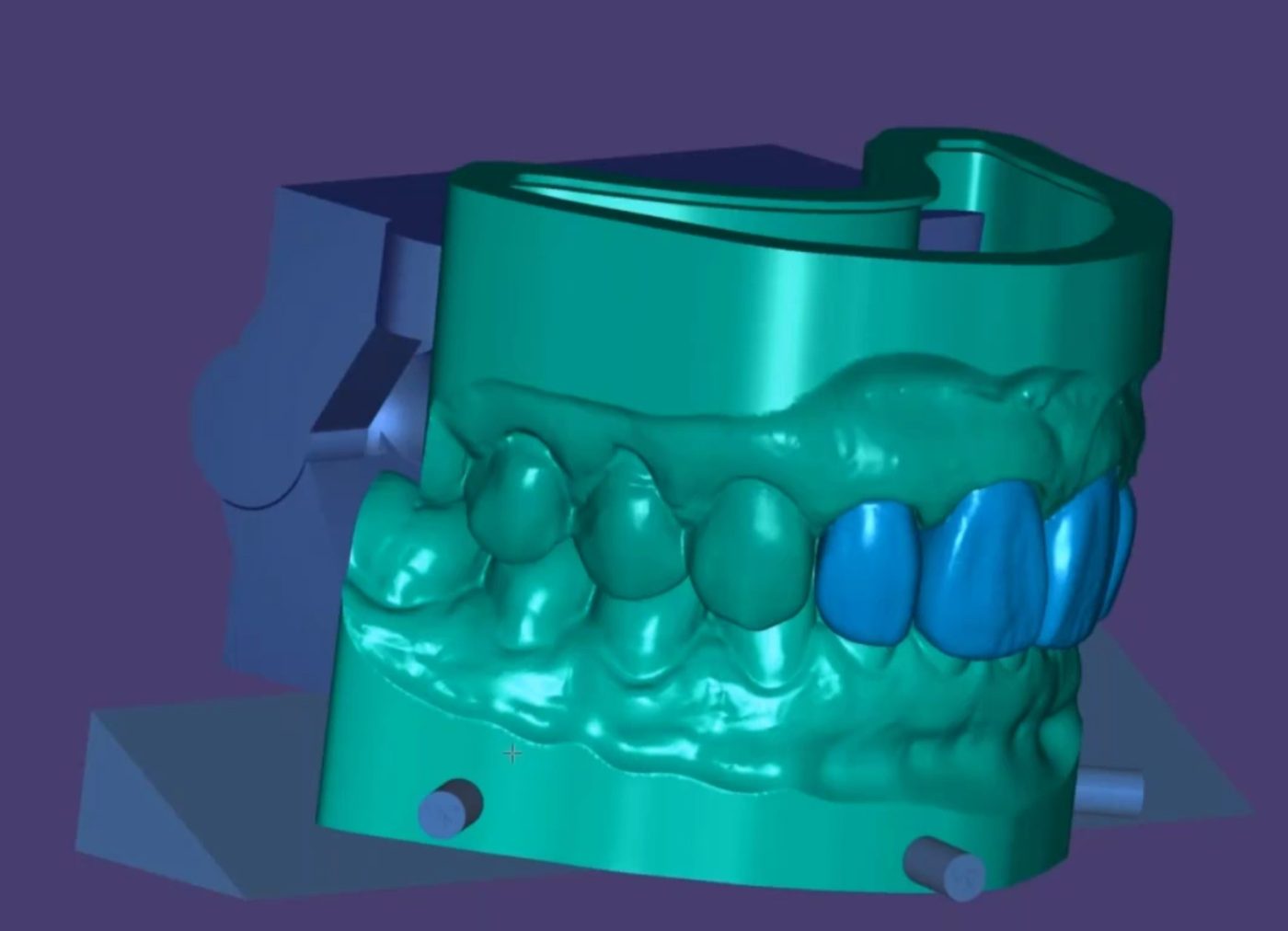
Why an intraoral scan still needs a model
Many restorations are designed and produced fully digitally, but labs and clinics often still want a physical model: to check contacts and fit, to finish ceramics, to present a case or to keep a record. A raw intraoral scan is not a printable model — it is an open surface that has to be turned into a closed, printable object with a base.
What a model design can include
- Solid or hollow models with a flat base for printing
- Removable dies for the prepared teeth
- Implant models with analog housings for your analog system
- Upper and lower models positioned in occlusion from the bite
- Connectors or bases suited to your articulator
What to tell the designer
Send the scans of both arches with the bite registration, so the models can be positioned in occlusion. Say which teeth need removable dies and, for implant models, which implant system and analog you use. Tell us your printer and resin, or any base thickness and tolerance settings you already use, so the model suits your production.
If you print articulated models, tell us the articulator or connector type you use. When unsure, ask before ordering; a model designed for the wrong system has to be redone.
Cost and turnaround
On our price list a model is $5 per unit with a 24-hour turnaround. Models are often ordered together with the restoration they support, so the crown and its model come back as one set.
Frequently asked questions
- How much does a printable dental model design cost?
- $5 per unit on our price list, with a 24-hour turnaround.
- Can you add implant analogs to the model?
- Yes. Tell us the implant system and analog you use and we design the housings for them.
- Do you need the bite for a model?
- If you want upper and lower models in occlusion or articulated, yes — the bite is what positions them.