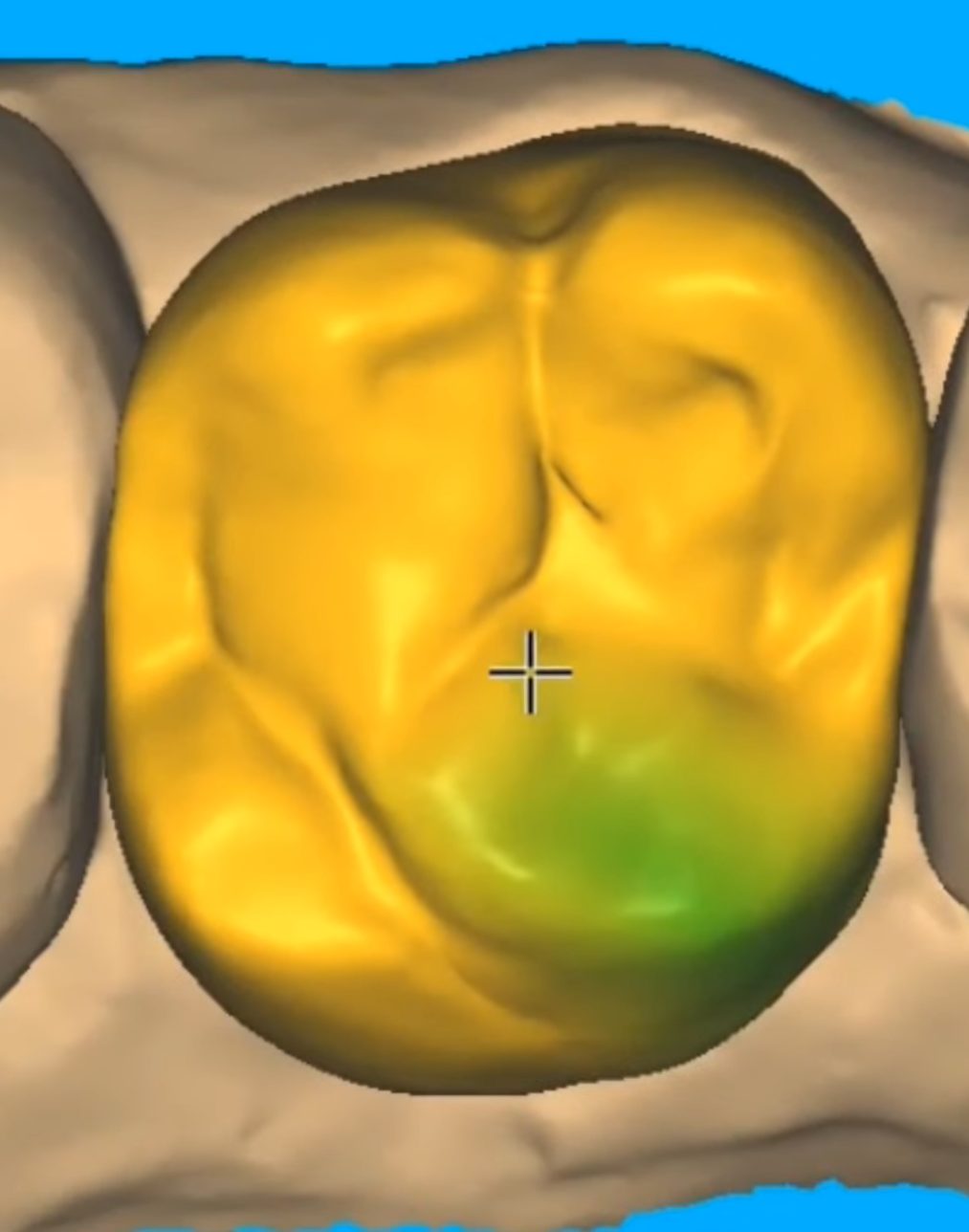
What a temporary crown does
A temporary crown, or provisional crown, covers a prepared tooth while the final crown is being made. It protects the tooth, keeps the gum in shape, stops the neighbouring and opposing teeth from moving and lets the patient eat and smile normally in the meantime.
A good provisional does more than fill the gap. It is also a test: the dentist and the patient can check shape, length and bite before the final restoration is produced. When the provisional is designed digitally, the same design can become the starting point for the final crown.
Short-term and long-term provisionals
How long the temporary has to last decides the material and the design:
- Short-term temporaries, worn for a few weeks while the final crown is made, are often printed in temporary crown resin
- Long-term provisionals, worn for months during implant healing, gum treatment or a change in the bite, are usually milled from PMMA, which is stronger and stays polished longer
- Provisional bridges need larger connectors than a single crown, because temporary materials are weaker than zirconia or lithium disilicate
Designing a temporary crown from a scan
When the preparation has been scanned, a temporary crown is designed like a final crown: margin line, insertion axis, cement space and anatomy matched to the neighbouring teeth, with the bite checked against the opposing arch. The main differences are a minimum thickness set for the temporary material and contacts that are slightly lighter, so the provisional is easy to seat and remove.
If the tooth has not been prepared yet, the lab can design a shell provisional instead: a crown designed on the unprepared tooth or on a digital wax-up, hollowed on the inside, which the dentist relines in the mouth after preparing the tooth. This lets the patient leave the first appointment with a provisional that already has the planned shape.
From wax-up to provisional to final crown
For aesthetic cases the sequence is usually: digital wax-up, mock-up or provisional in the mouth, adjustments, then the final crowns. Because every step is digital, changes made to the provisional can be scanned and carried over to the final design, so the patient gets the shape they already approved.
What to send for a temporary crown case
- Scan of the preparation, or of the unprepared tooth for a shell provisional
- Scan of the opposing arch and the bite registration
- Material and production method: printed resin or milled PMMA
- How long the provisional must last
- Shade, and photos for front teeth
Outsourcing temporary crown design
We design temporary crowns and provisional bridges, printed or milled, as print- or milling-ready STL files. They are charged as crown units, from $12 per tooth, delivered in 24 hours with revisions included until you approve the design.
Frequently asked questions
- What is a temporary crown made of?
- Usually a printed temporary crown resin for short-term use, or milled PMMA when the provisional has to last longer. The dentist or lab chooses the material for the case.
- How long can a temporary crown stay in?
- That depends on the material and the treatment plan, and the dentist decides. Short-term temporaries are typically worn for a few weeks; PMMA provisionals are used when the patient must wear them for months.
- Can a temporary crown be 3D printed?
- Yes. Temporary crowns are designed in CAD from a scan and printed in temporary crown resin, or milled from PMMA for longer use.
- How much does temporary crown design cost?
- Temporary crowns are designed as crown units: from $12 per tooth, delivered in 24 hours with revisions included.
DM Dental Design offers dental CAD design services for labs and clinics: send your scans and get production-ready files back, with revisions included.